
Find noteworthy events and exciting news here!
October 2020 Arrival of Two Outdoor Cat Cubbies
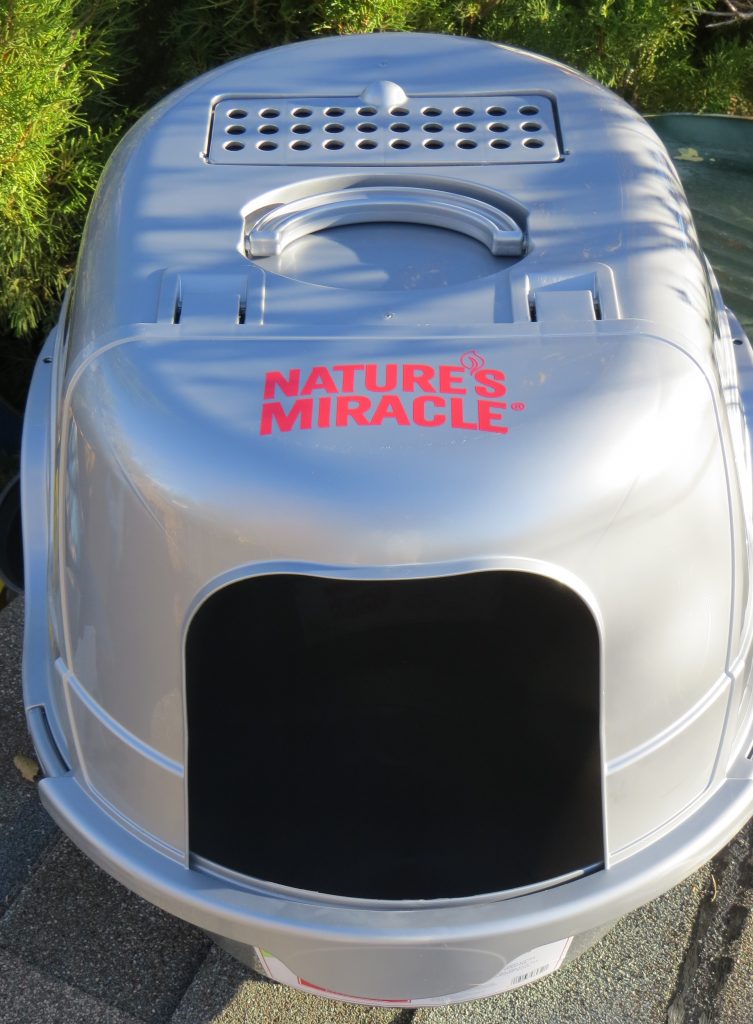
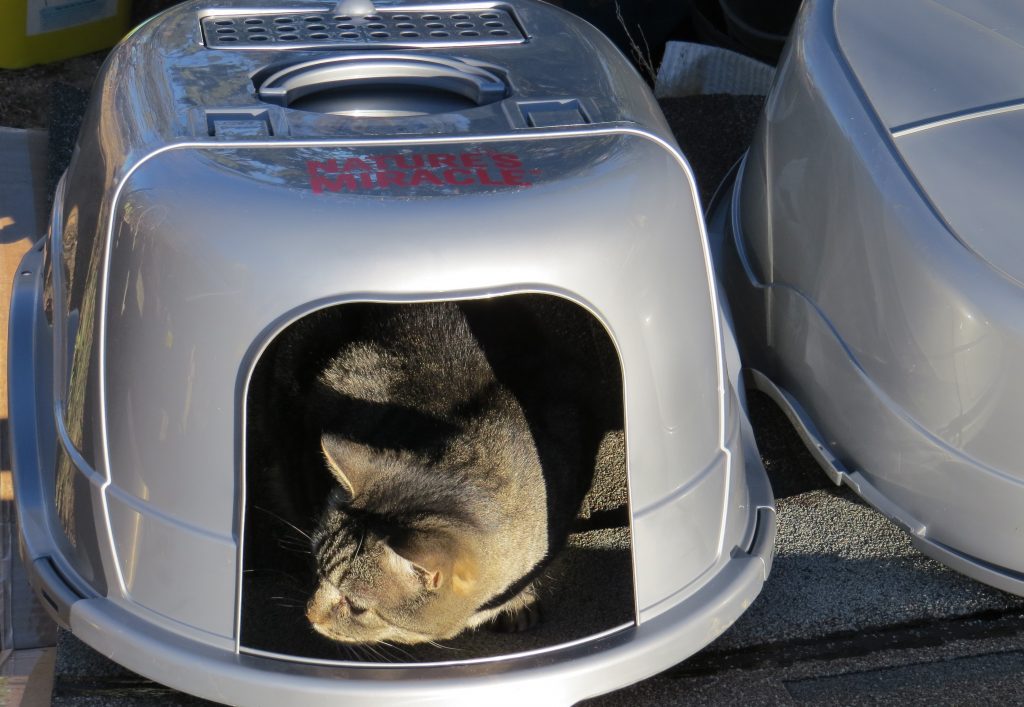
This celebration is for two of these, along with the blue tent beds to put inside them. Cats don’t like bare plastic, and plastic is cold in wintertime and hot in summer, so insulation is needed.
One of the cats added their stamp of approval (upper right) even before opening up the tent bed!
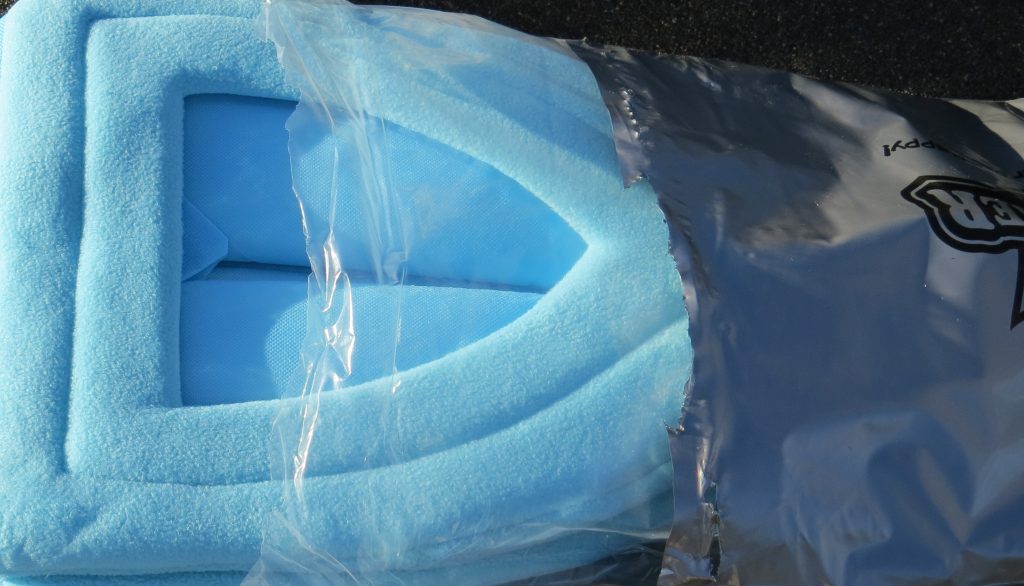
Here it is coming out of the package.
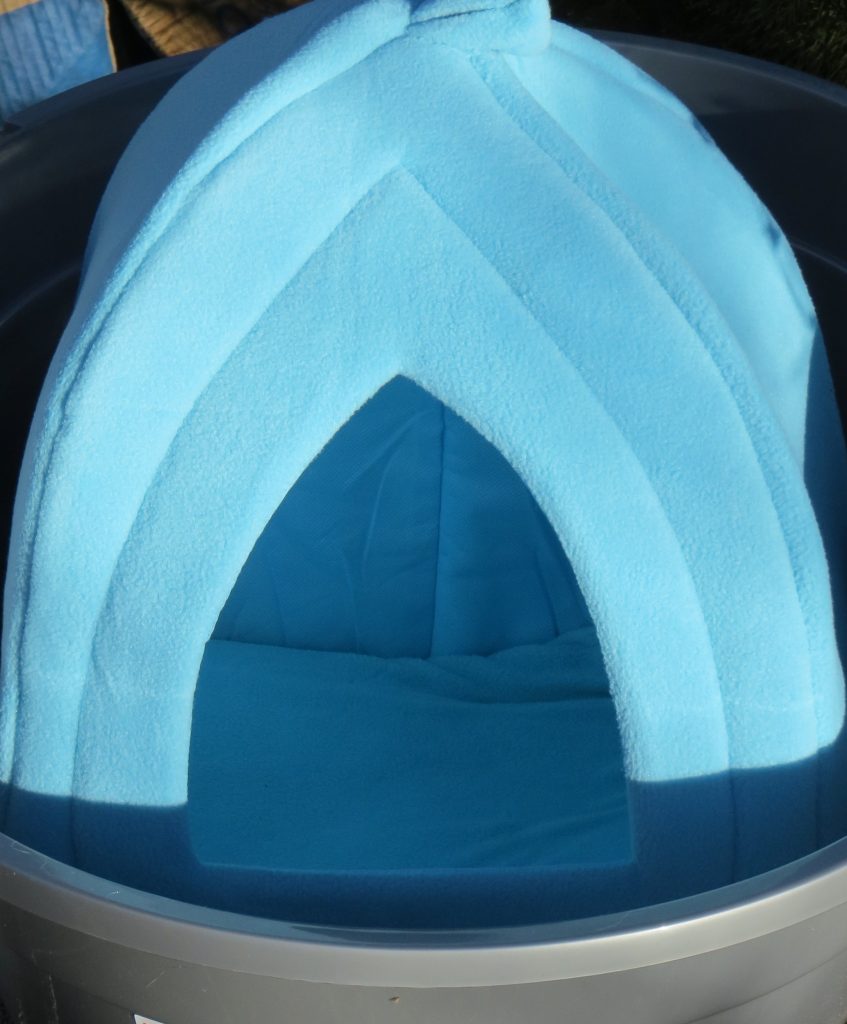
And set into the bottom half of the cubbie-to-be.
Though a few of the cat colony members venture as far as the chicken houses, fewer still to the barn, and only a couple to the old barn on the other side of the property, most stay in the yard area. After poor Snowball fell victim to coyotes and Dora lost part of her tail, I began enclosing the yard area with field fence. Field fence is of woven wire having graduated-size openings. Normally, the smaller openings are intended to be at the bottom to keep out (or in) smaller animals such as rabbits, skunks, or badgers. I’ve installed this one upside down so that cats can run in and out. A skunk comes through after dark to dine at the patio buffet with the cats, but the fence keeps most larger animals out. I say most, because some deer easily jumped over the four-foot fence this summer.
My helper, Dark Kitty, performing a quality assurance test during construction.
The only yard area reliably out of the full blast of a winter blizzard is a small area at the south end of the house. This is where the cats take shelter during adverse weather, during the heat of a summer afternoon, or simply to sleep at night or nap during the day. Other than a small tool shed that Chevron’s family has used, there is no permanent structure for them. I order their food online from Chewy, and use the cardboard boxes it’s delivered in for their temporary cubbies. They’re temporary, because the tops cave in, partly from weather and partly because the cats like to lie on top of the boxes, as well as take shelter inside them.
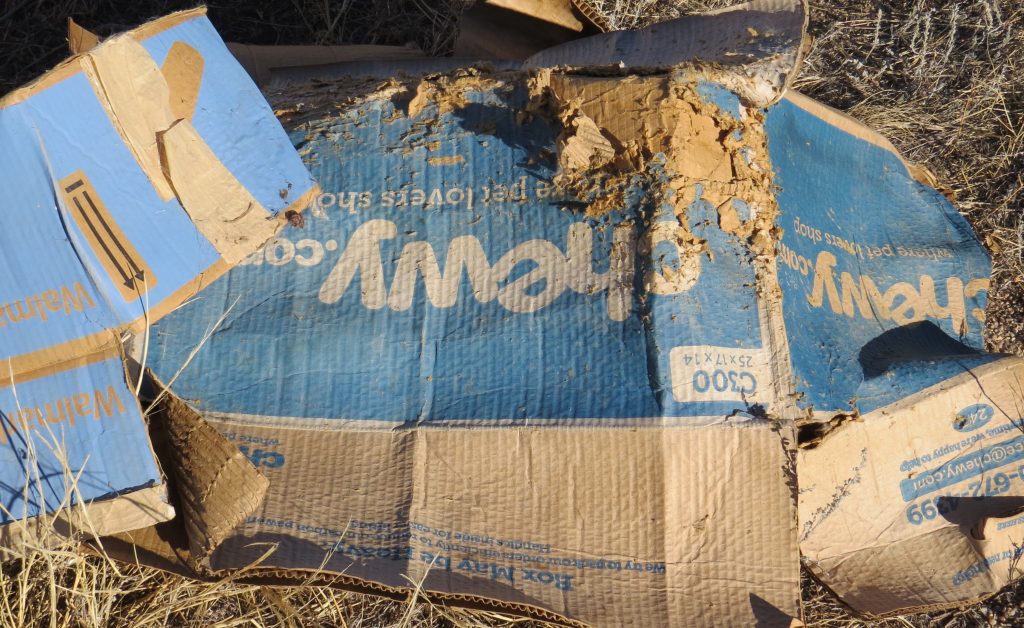
Here’s what happens to the cardboard cubbies over time, with their time in service being weather-dependent. This one also has been used as a scratching post. Since our trash company no longer recycles, this pile is on its way to the dumpster, or to mulch a raised garden bed.
The chicken houses aren’t weather-tight, so those require additional protection for the few cats who use them. What has worked well for a personal-sized shelter – or for kittens – in the chicken houses is the heftier type of covered litter box (absent litter) with the addition of a cat bed inside it. Covered litter boxes have an open area on top of the cover, usually for a charcoal filter to be installed – but they’re susceptible to rain or snow entering through that opening. This arrangement is best used inside something else for additional weather protection. One of the chicken houses has a round domed litter box with a (now soiled) cat bed inside it, that cats still use. The price of the round domed type is high: $30 – 40. But I found a well-constructed type where I could get two for the price of one domed one, and recently did just that. I also ordered two tent-type cat beds to put in them. What was really exciting was the size of the boxes they arrived in – large enough to hold the assembled “cubbie”!

Here’s the tent bed installed inside the assembled covered litter box, and the whole “cubbie” inserted inside the shipping carton. Next step is to close some of the flaps to keep out the wind and weather.
The cats and I had fun putting these together, and finding a place for one south of the house, and for the other on the patio for Rocky to use. I’ve set shingles from a roof replacement atop the boxes, and the cubbie inside holds up the top of the box. The cats love them!
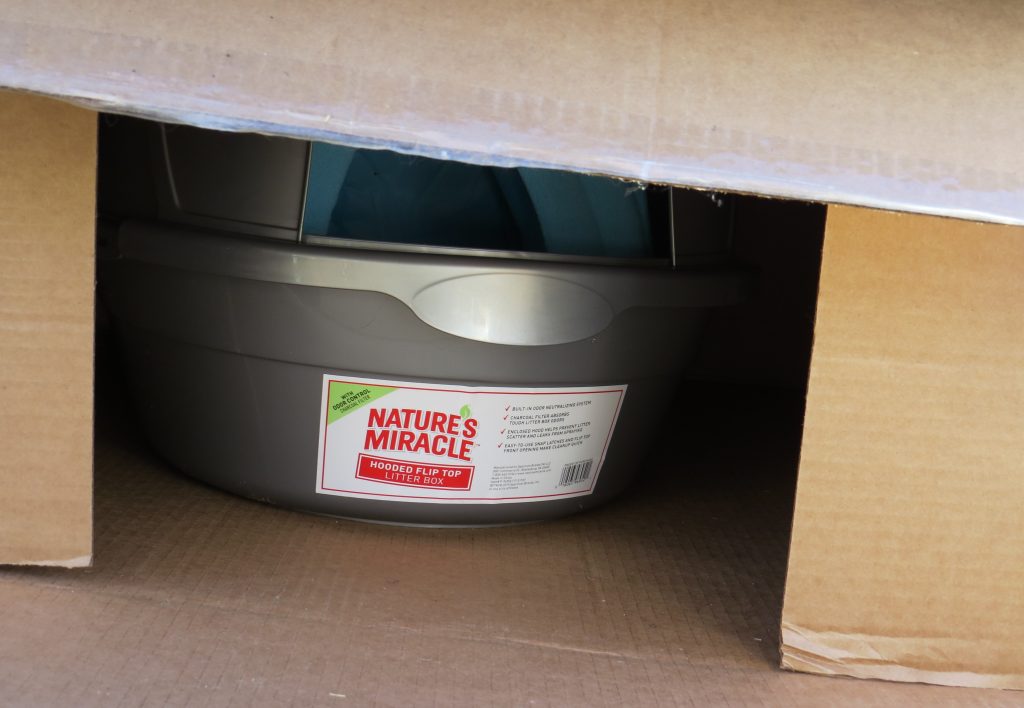
It’s a little cozier with the flaps shut.
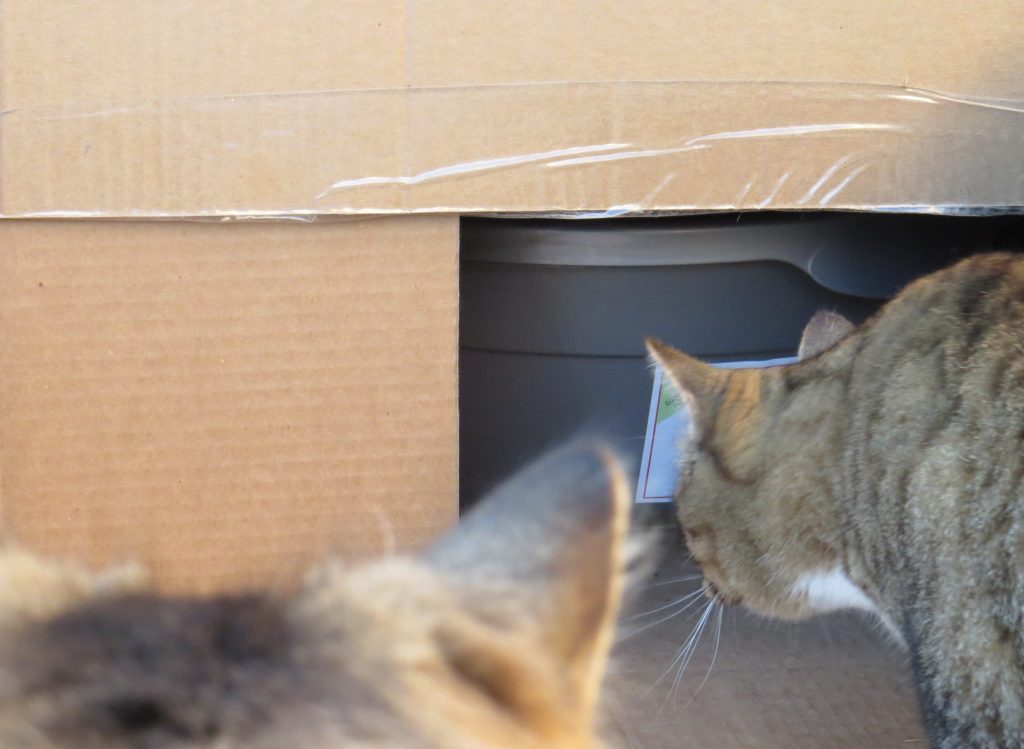
Quality assurance testers are lining up….
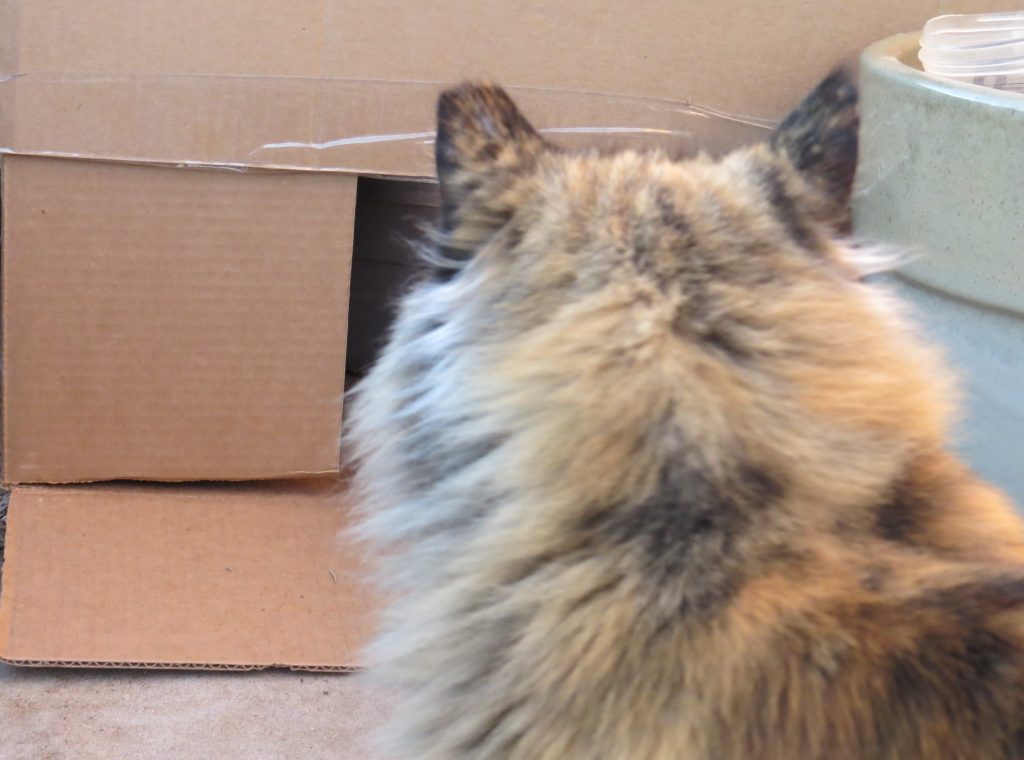
Little Calico Baby performing an exterior inspection, including flaps, doorway, and flower-pot securing flaps. Her ears exhibit the difference between the cropped one (left) and the natural one (right). This is done at the time of neutering or spaying trapped feral cats in order to allow an observer to discern the cat’s reproductive status.
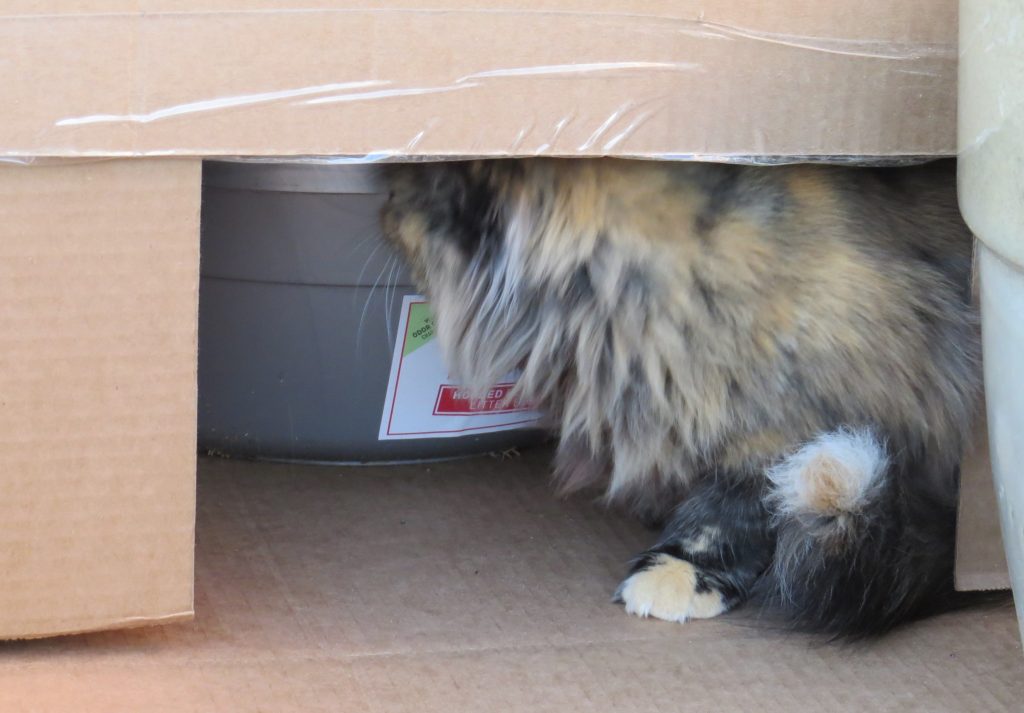
Interior check.
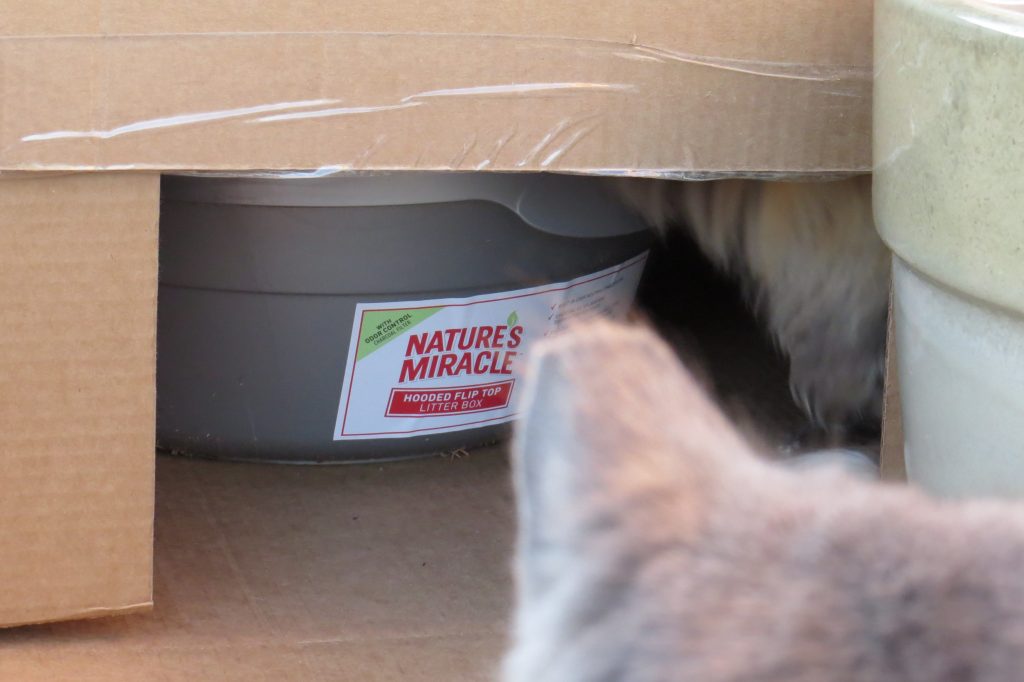
Next tester waiting for Little Calico Baby to come out. Or maybe it’s a supervisor simply watching to make sure the inspection is performed with the greatest rigor.
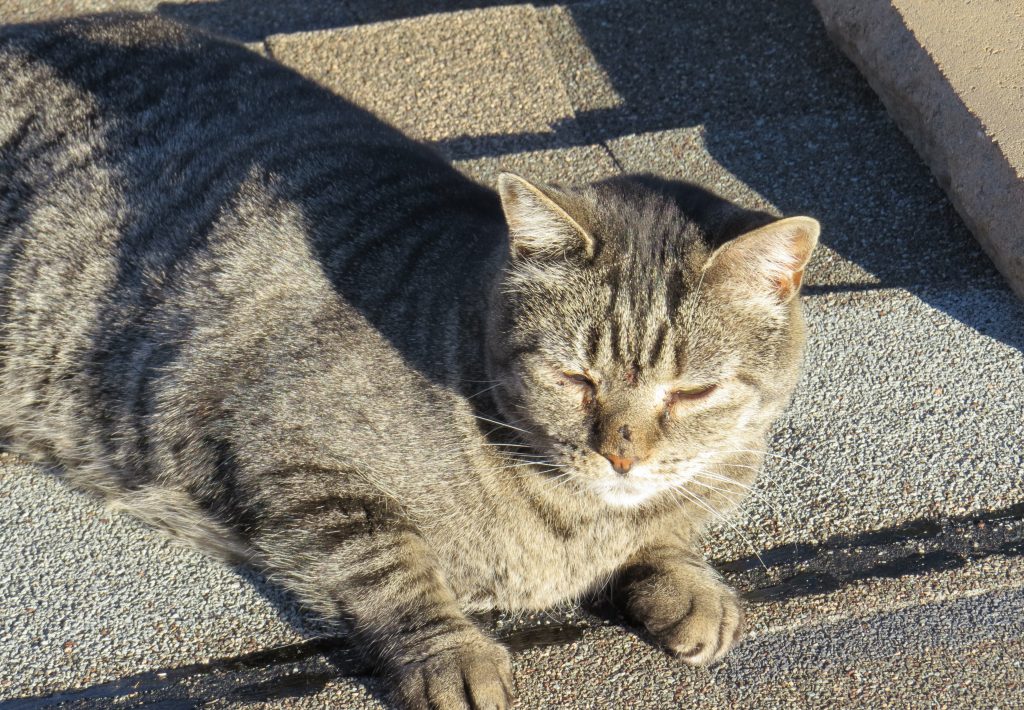
Roofing inspection. Asphalt shingles set on top and somewhat held in place by the block (top right corner) set above the covered litter box inside, which provides support for the carton and the block placed atop. Dark Kitty is the inspector. She’s a stray who showed up already spayed (as tested by time), so lacks the cropped ear.
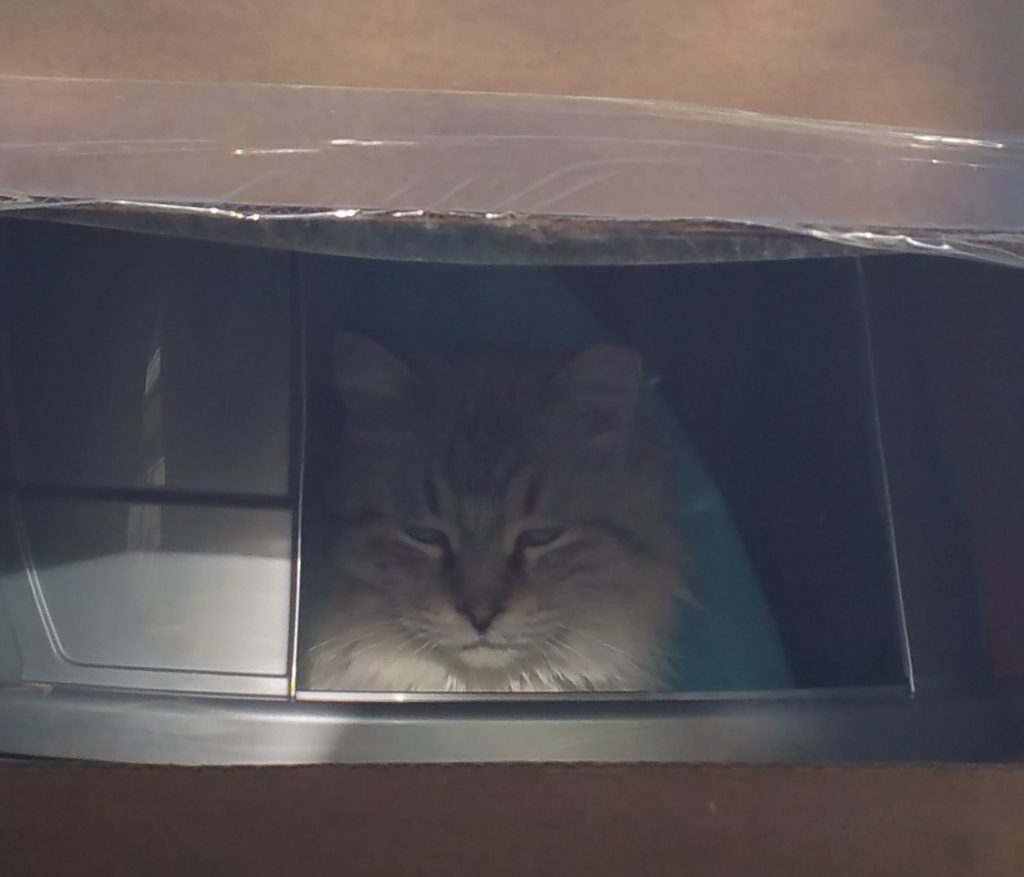
Here’s Sooty Toes testing the patio cat cubbie intended for Rocky. Rocky took possession later. Rocky is our poster boy and has a whole page to himself here.
September 2019 Trap-Neuter-Release Operation (no pun intended)

The Humane Society of the Pikes Peak Region has a Trap-Neuter-Release (TNR) program. They also have a brand new mobile veterinary clinic called the Wellness Waggin’. Put the two together, and see some amazing results.

When my dayjob was eliminated and my income plummeted, I contacted the humane society about bringing in the feral cats. I was told they couldn’t accommodate them because they were overwhelmed with ringworm-infected cats from a facility in Pueblo. The Pueblo shelter had been closed due to charges of neglect. Any cats brought to HSPPR likely would be euthanized, I was told. But they offered to come out as part of their TNR program.
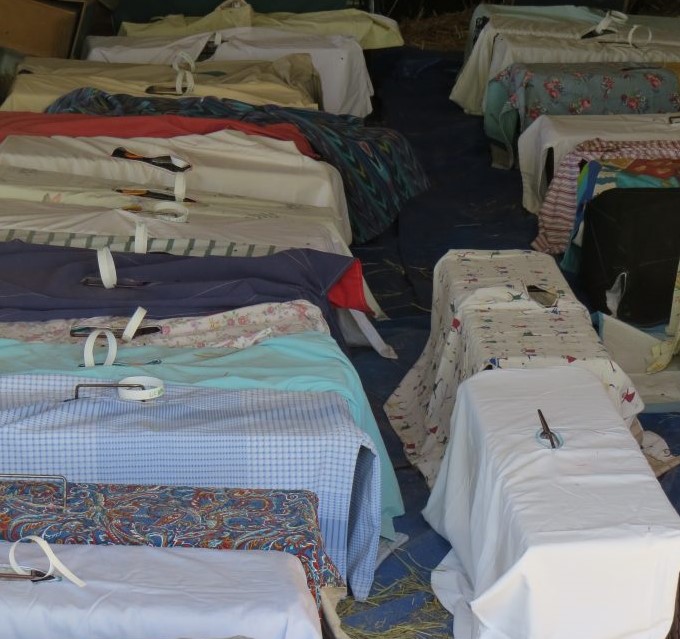
During two days, forty to fifty cats were trapped and set in a staging area.

On the third day, they were vaccinated … (These two furry youngsters are Feather and Stormy. The ladies are AnnaMarie and Lois.)
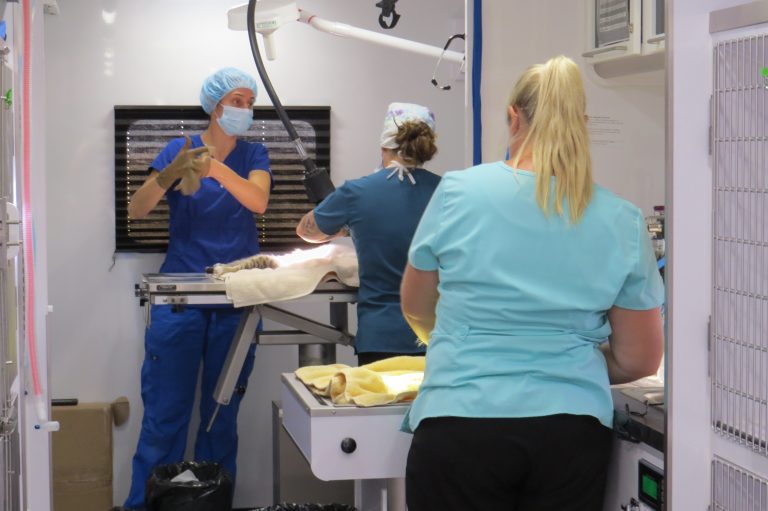
… spayed or neutered in the mobile clinic by a veterinarian …

… and monitored in the mobile clinic …

… before being returned to the staging area to eat a good meal and spend the night. They were released the following morning.
Four cats avoided the traps: one male and three females. One of the females (Penny) later died due to illness that ravaged the colony in 2019. The male has disappeared. Two of the females had kittens this spring, which I hope to give to a neighbor after they (the kittens, not the neighbors) recover from a respiratory illness and eye infections. A stray, intact male showed up after the TNR, so kittens must have been fathered either by the stray or the now-disappeared Butterscotch (probably Butterscotch, based on the orange and buff coloring in the kittens). Due to the pandemic, I’ve not taken the stray to the humane society, but have put him into his own pen.
You can find additional information and commentary on this event here: https://www.hillcrest.farm/thank-you-hsppr/
Recent Comments